Your business, intelligently assisted.
BOTAN.IA automates recurring work, builds intelligent assistants and manages the systems behind your business so your team has more capacity to serve clients, pursue growth and focus on higher-value work.
Make room for growth.
Growth often creates more coordination, more follow-up and more repetitive work.
BOTAN.IA helps reduce that operational load so your team has more capacity to focus on clients, revenue-generating work and the priorities that move the business forward.
Recurring work moves through one assisted route. The time it used to take becomes available for clients, sales, strategy and delivery.
More capacity
Reduce repetitive work and manual coordination.
More focus
Give your team more time for clients, strategy, delivery and higher-value work.
More room to grow
Build systems that can support additional volume without adding the same amount of administrative overhead.
Support built around the way your business works.
BOTAN.IA combines operational experience with intelligent systems to reduce repetitive work, improve coordination and create more capacity for the work that drives the business forward.
Automate
Remove recurring work that does not need your team’s constant attention.
Build
Create intelligent assistants around the workflows your business already uses.
Manage
Maintain the agents, automations and connected systems already supporting your team.
Improve
Refine systems as your business, tools and priorities change.
A clear process built around your operations.
We start with the work itself.
We identify where assistance can reduce manual effort, improve coordination and create more capacity for higher-value work.
Then we build the right system around your existing workflow.
Assess
Understand the workflow, tools and operational friction.
Build
Design the right assistant, automation or system.
Launch
Connect, test and place the system into daily use.
Manage
Maintain, refine and improve it over time.
See an example system
Follow one process from start to finish. Hover over or tab to any step to see what it does.
Assistance built around real work.
BOTAN.IA creates assistants that handle defined parts of your operations and work alongside the systems your team already uses.
Calendar Assistant
Manage scheduling, preparation and follow-up.
Client Intake Assistant
Capture, organize and route incoming requests.
Reporting Assistant
Prepare recurring reports, organize files and send information where it needs to go.
Operations Assistant
Connect tools, track recurring tasks and keep information moving.
Each assistant has a defined role, access to the tools it needs
and clear points where your team steps in.
Already using intelligent tools?
BOTAN.IA can manage, connect and improve the agents and automated systems already in your business.
Management can continue month to month, so the systems your team depends on keep working as your operations change.
- Review existing agents
- Improve prompts and workflows
- Connect disconnected tools
- Troubleshoot failures
- Maintain integrations
- Monitor performance
- Update systems as operations change
Works with the tools you already use.
Most businesses already have the software they need. BOTAN.IA connects it, so information moves between tools without someone copying it by hand.
- Calendars
- CRM
- Spreadsheets
- Documents and storage
- Forms
- Accounting and invoicing
- E-signature
- Team chat
- Project management
You do not need to replace what already works. If you are unsure whether a tool can connect, we check before anything is built.
See how much capacity you could create.
Estimate how much recurring manual work is consuming each week and how much time could be redirected toward clients, delivery and growth.
You could create 8.4 hours of additional capacity per week.
Approximately 32 hours per month.
That is time your team could redirect toward client work, sales, strategy, delivery or other higher-value priorities.
Estimated capacity, based on 46 working weeks a year and a 40-hour workweek. An estimate to help identify opportunities, not a guaranteed result.
Built with oversight in mind.
Systems should make work easier without removing control. BOTAN.IA designs clear review points, permissions and human oversight where they are needed.
- The system preparesIt gathers the information and prepares the next step.
- You decideReview, approve, edit or reject when your judgment is needed.
- The system continuesOnce the decision is made, the remaining steps continue automatically.
Not every action needs approval.
The level of autonomy is set around the work, the risk and your preferences.
Keeping a client’s contacts in sync across Google and Outlook.
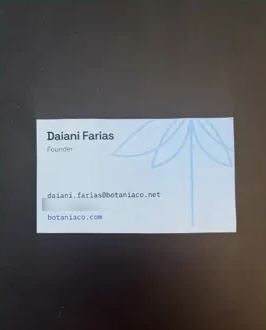
A WhatsApp assistant that adds contacts to both address books from a photo of a business card, and asks the client before it saves anything.
Executive-level assistance, applied to modern systems.
BOTAN.IA was built from more than a decade of experience supporting executives and leadership teams across global organizations.
Good assistance requires context, organization, judgment and follow-through.
BOTAN.IA applies those principles to automation and intelligent systems so businesses can operate with less manual coordination and create more capacity for growth.
Technology handles the repetition. Human experience shapes the system.
Create more capacity for the work that grows your business.
Let’s identify where intelligent assistance can reduce operational friction, create more capacity and support the priorities that move your business forward.